Refuturing the Soil – 1. –from the lost memory of Hikoshichi (in Japanese)
#Kite #Exhibition #Film
The post-war period in Japan can be well described as “crooked” or being in a state of concealed or simply, dishonest. Therefore, Japanese academics says, our post-war didn’t end yet. According to Akiko Hashimoto, author of the book ‘The Long Defeat: Cultural Trauma, Memory, and Identity in Japan (2017)’, the Japanese national traumas of the Asia Pacific War (1931-1945) have been narrated through three different trajectories: The first is “Memory of the beautiful country”: encouraging nationalism by glorifying and acclaim the death of the ancestors as heroic actions. The second is “Memory of the tragic country”: focusing on victims within the national border. The third is “Memory of the guilty country,” calling for justice for the victims in the neighboring countries Japan occupied. But these narratives have never been reconciled each other, and thus Japan remains, as Norihiro Katou names it in his book ’Post-defeat theory (Haisen-go ron, 1997, 2015); a “crooked state”. What does it mean, or what is the “appropriate way” for Japanese to mourn the dead of the war?
This project is derived from my reflection on my difficult relationship with my father, and on my father’s distant relationship with his father Hikoshichi- my grandfather.
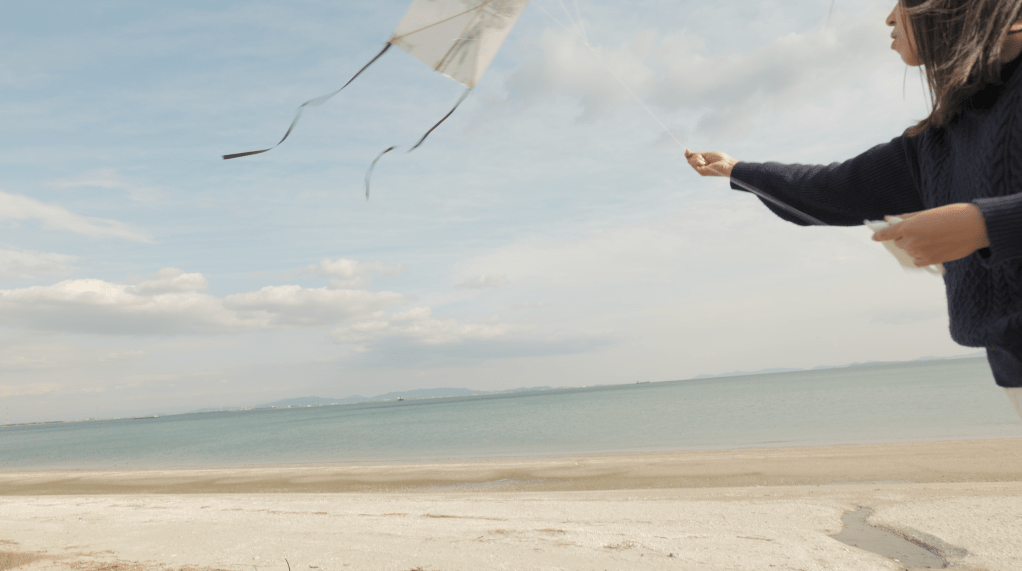
When I was having repeated troubles with someone, a therapist asked me if I had other relationships that made me react in similar ways. This brought up forgotten/suppressed childhood wounds, which made me wonder if my father was also carrying subconscious trauma from his childhood. Until that moment, I hadn’t well reflected on the Asia Pacific War from the perspective of my own family or that of their local community.
When my father was eight years old, he survived the US air raid on Handa City in the Aichi district. The air raid killed at least 264 people, including my grandfather, Hikoshichi; however, my family rarely spoke about memories of the war or Hikoshichi’s death. As a child, I was only told that “he was hit by a bomb and died”. I regret that I accepted this explanation, as if this was an ordinary and unremarkable way to die, and as if there were no regard for the emotions tied to the aggressor’s responsibility or the victim’s suffering. My grandfather wasn’t drafted into the military due to his disabled leg, which might have led my father’s family (in fascism nation) to subconsciously diminish both his life and the circumstances surrounding his death.
Below: Toshie Takeuchi, Solo exhibition at Eks-Rummet Copenhagen, 2023
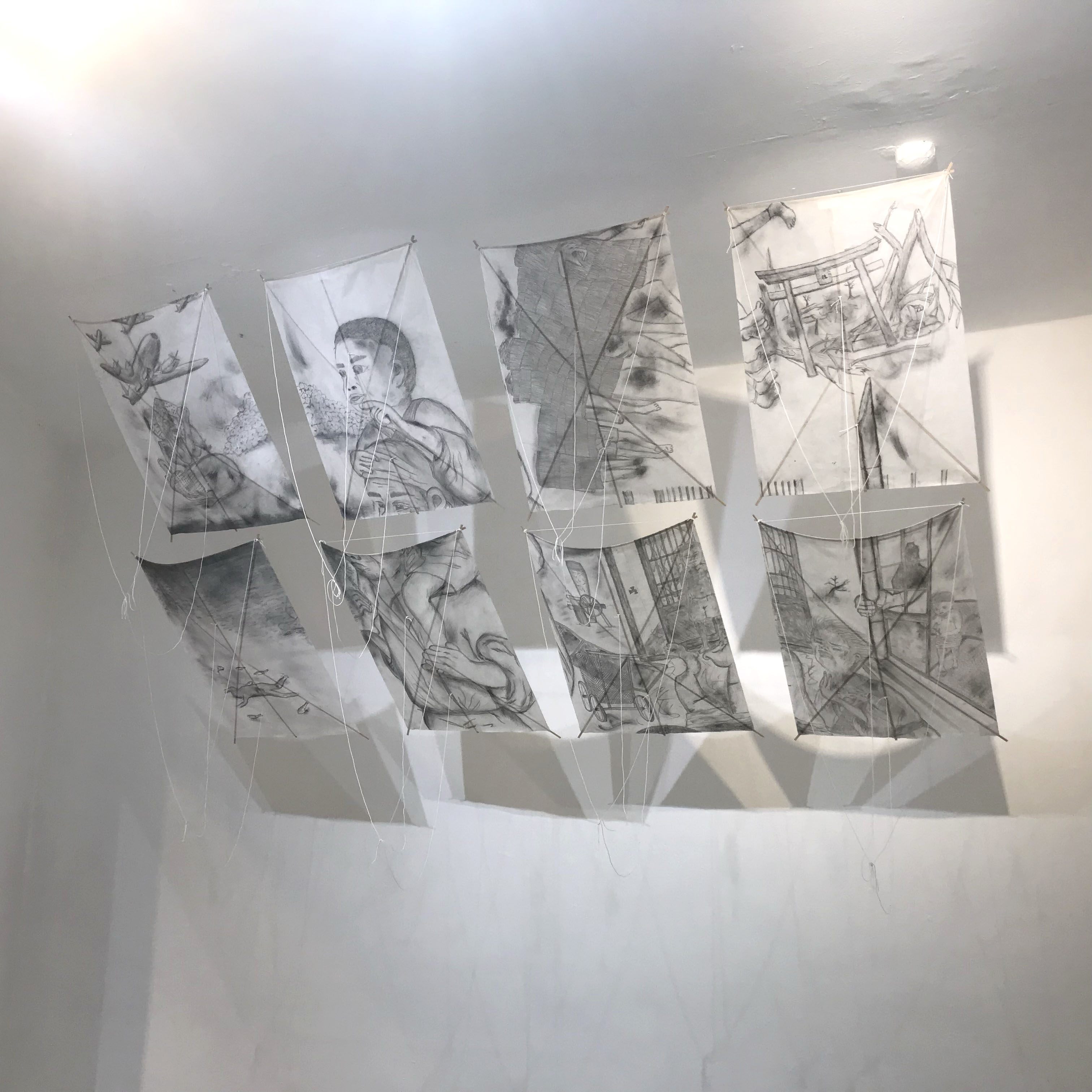

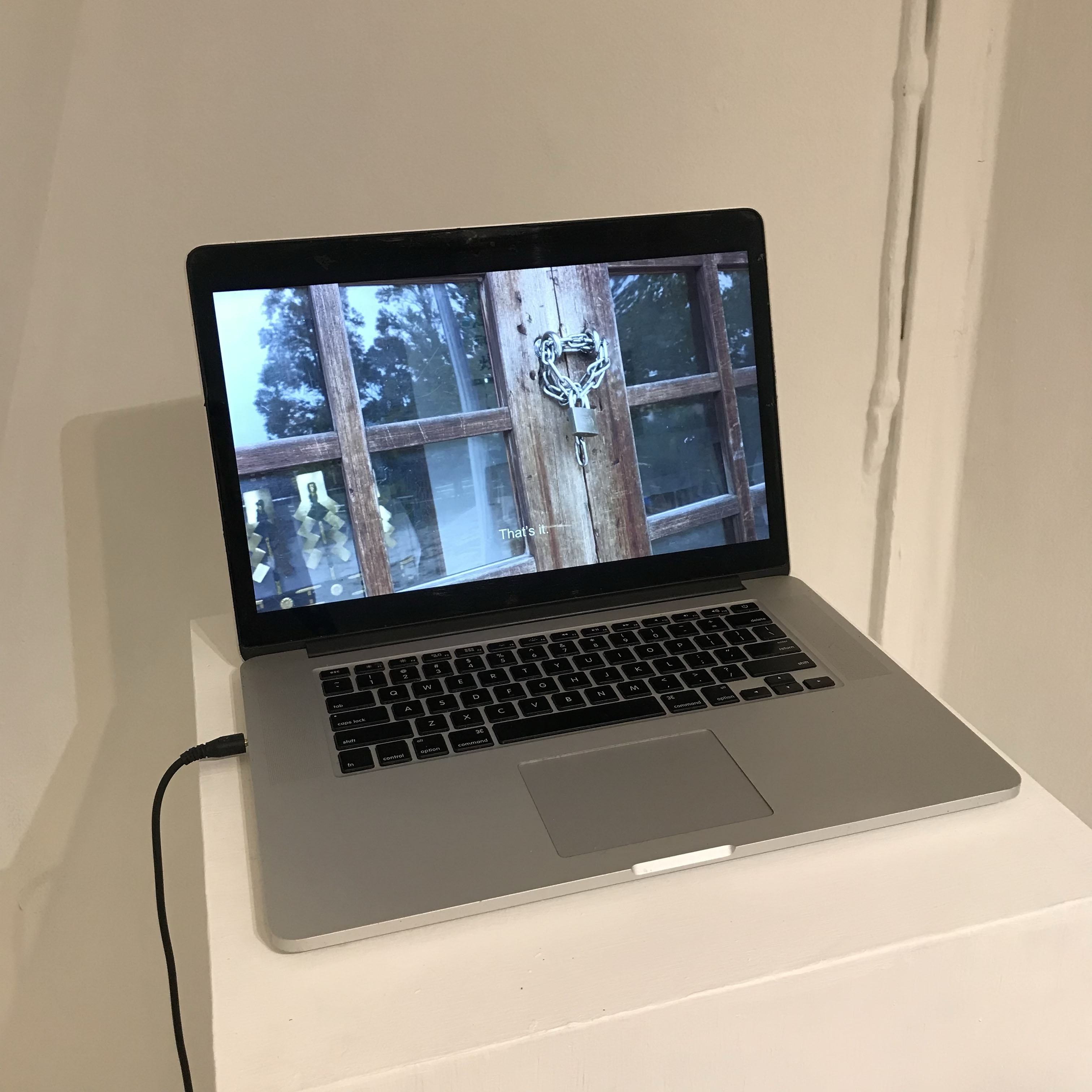

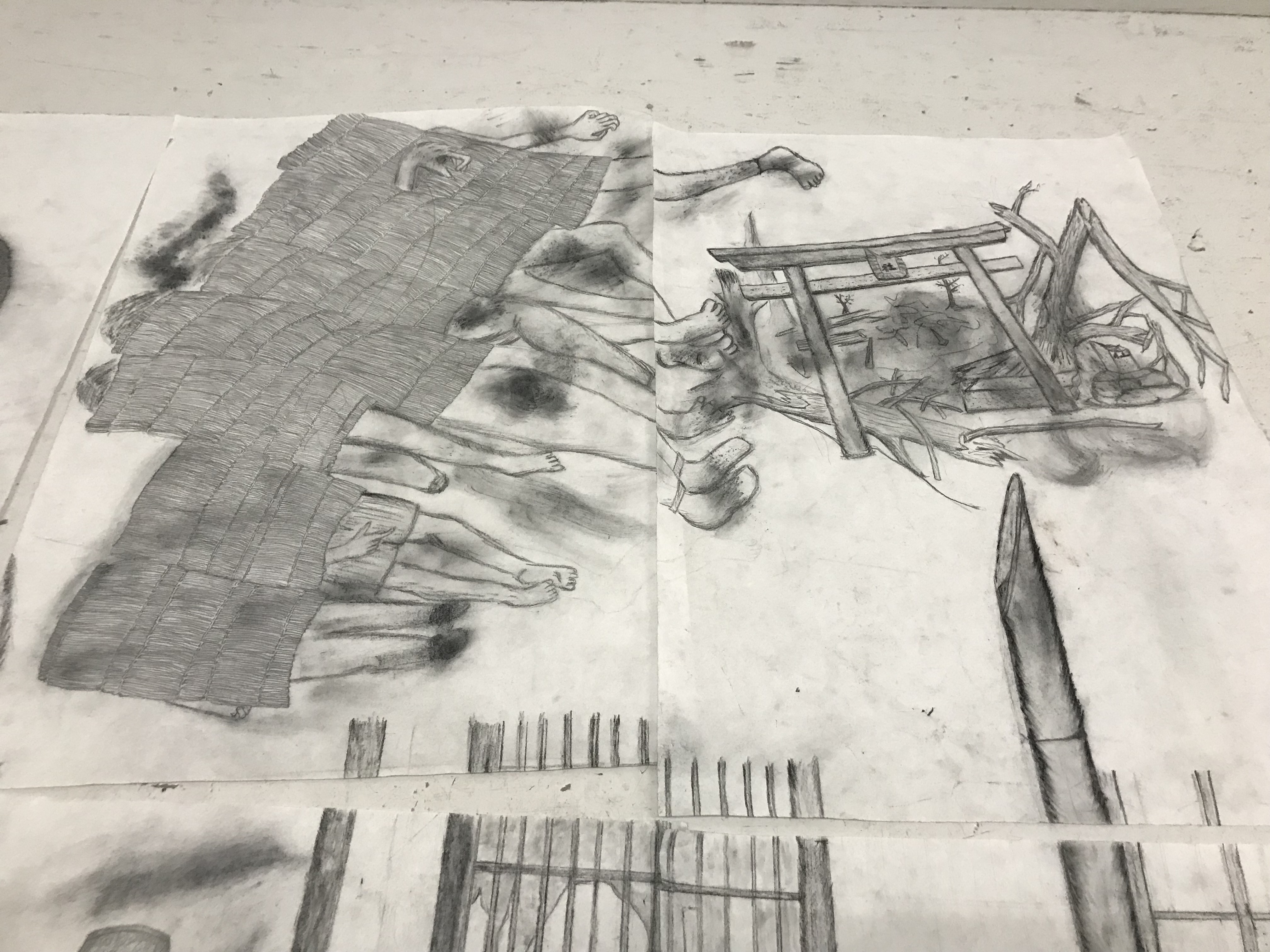
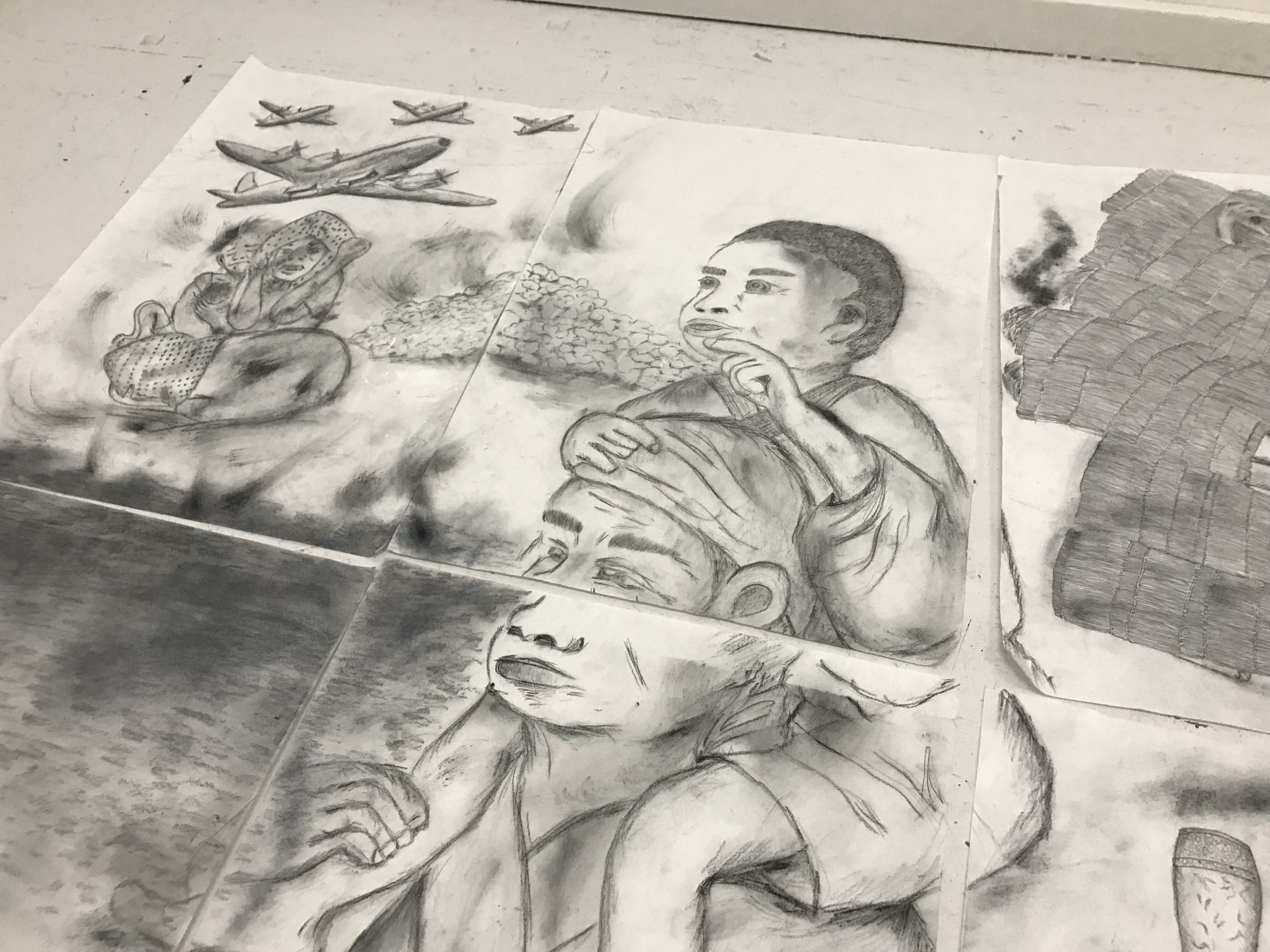
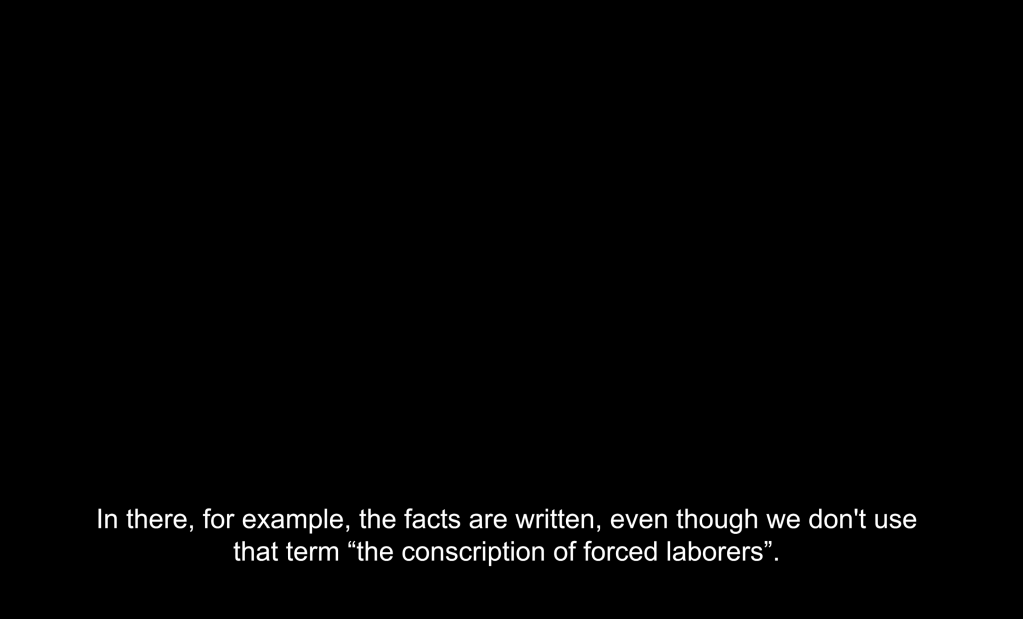
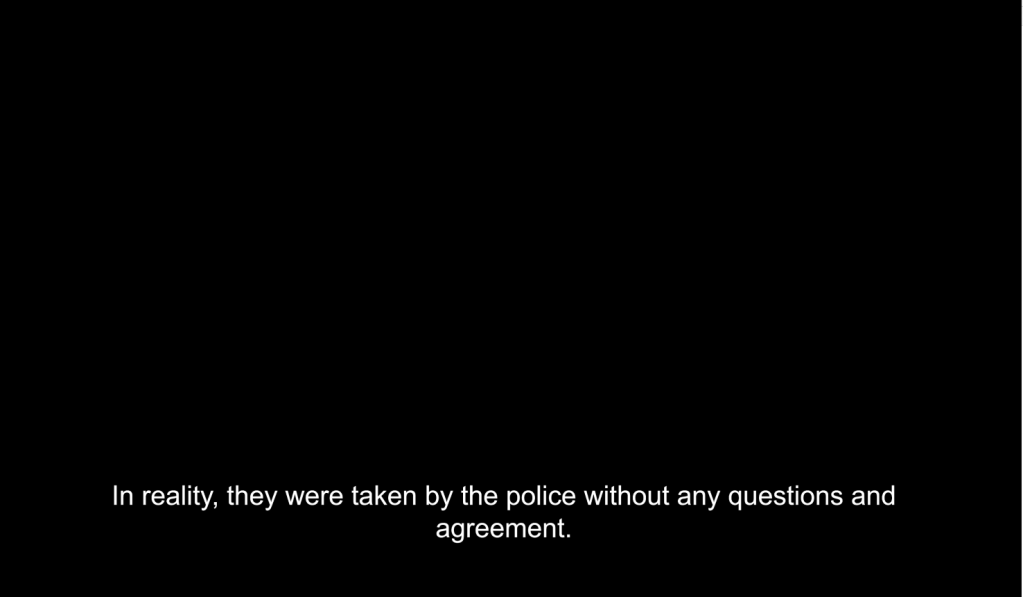
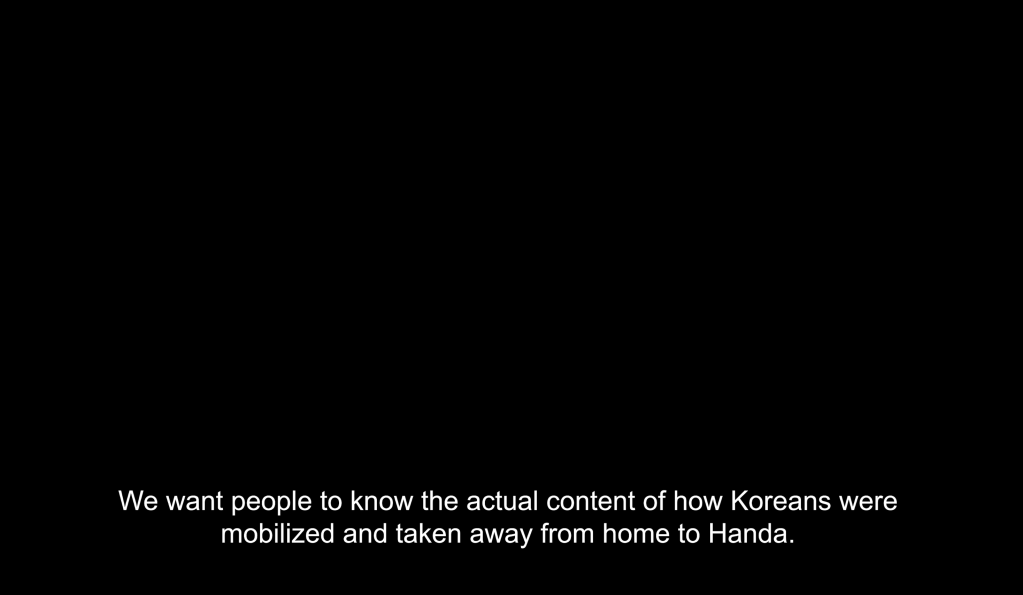
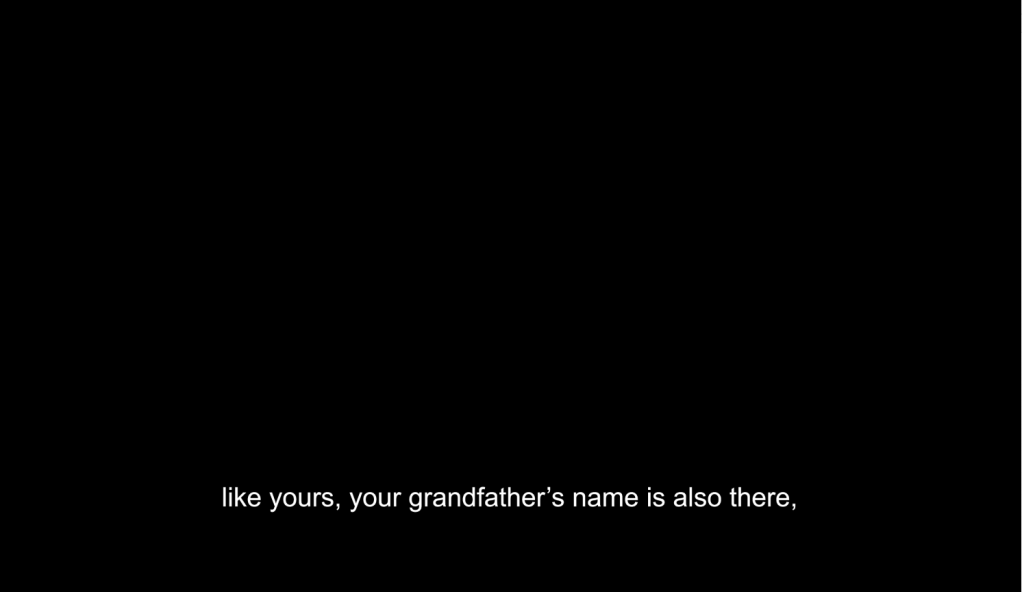
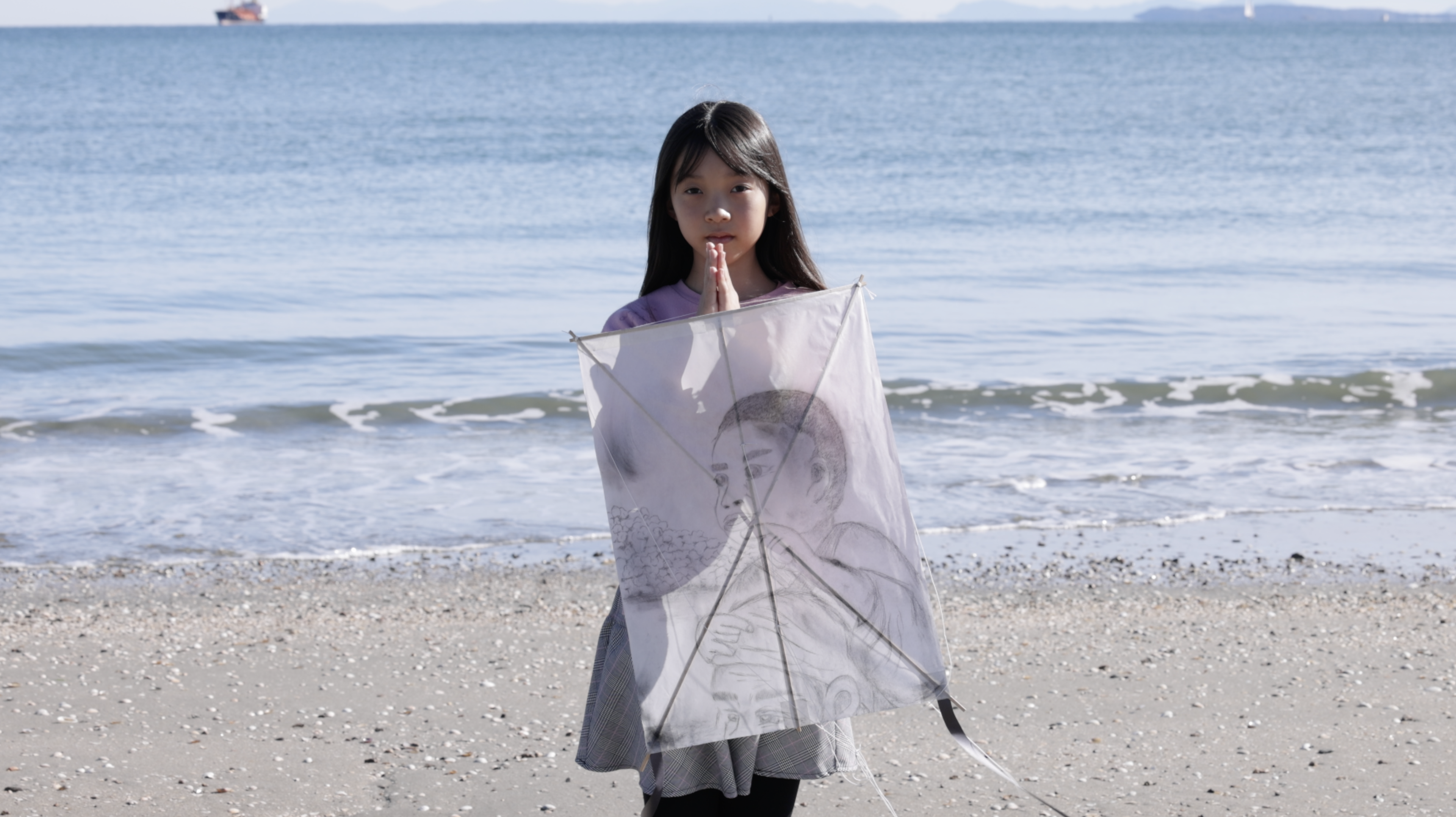
The exhibition consists of eight kites with hand-draw scenes based on interviews with my father and local victims who were of a similar age. It also draw inspirations from published testimonies by the Society to Remember the War and Air Raid in Handa (Sensō to Kūshū wo Kirokusuru Kai). The members of the Society have been documenting local testimonies for more than thirty years since the 1980s. Although most testimonies were collected in the early years, new accounts from air raid survivors continued to emerge even as recently as a few years ago.. The kite installation is accompanied by a sculpture of hands holding the kites in the sky, and a 45-minute video of the interviews with my father and historian and archivist Akio Satou. In the interview, my father admitted that he had believed that Hikoshichi’s death was a source of shame for the family for a very long time.
It was in the midst of the corona crisis, therefore, I could only conduct those interviews with him over Skype. I had actually imagined creating a kind of dance film about this subject together with him, once the restriction was over. But he was diagnosed with a sudden leukemia and passed away a half year after the last interview. This personal experience shaped the form of expression as drawing and crafting kites. These kites are not meant only to be exhibited, but to fly – to lift up his and Handa’s collective memories as I had been disregarding them.
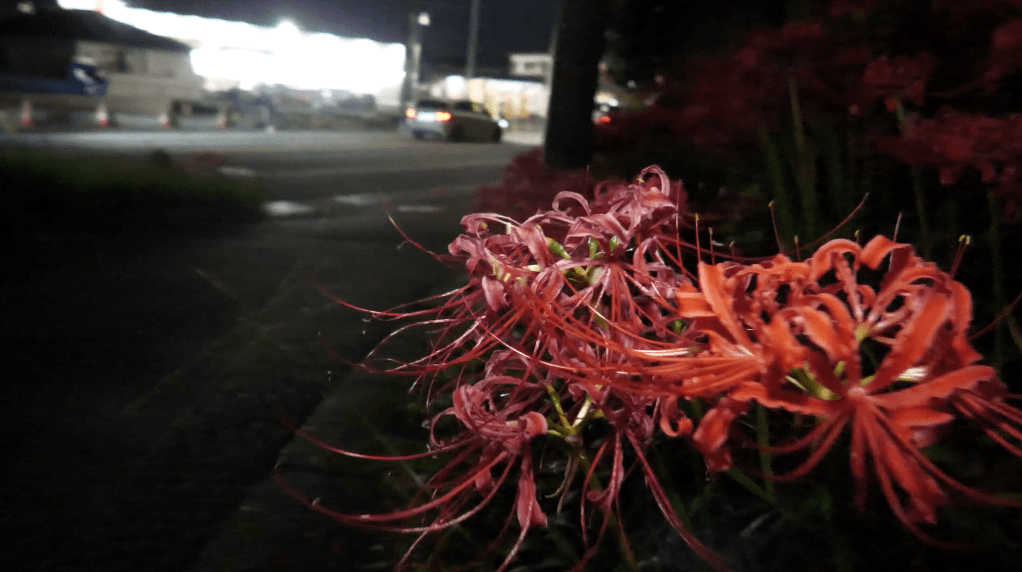
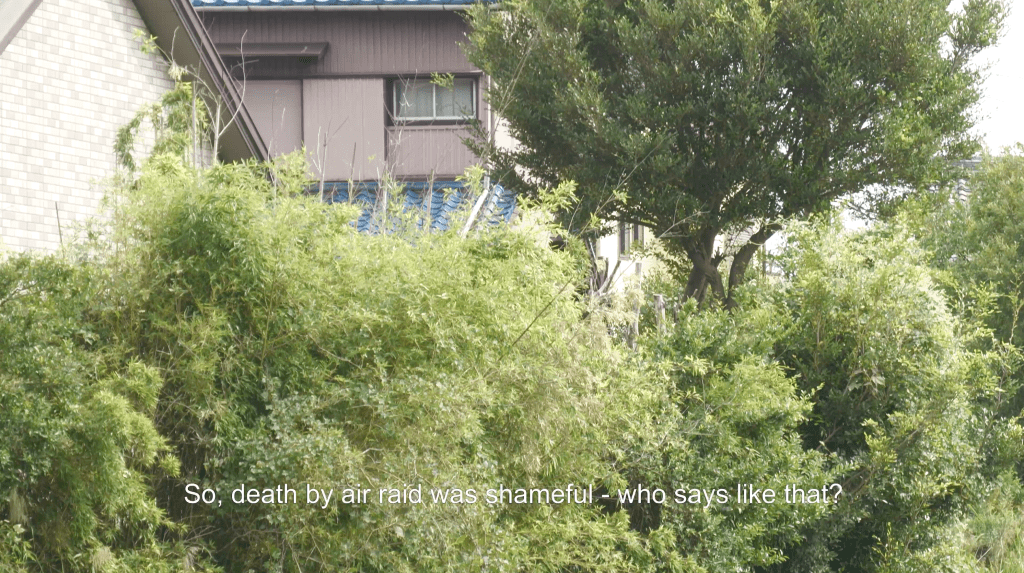
Below: Toshie Takeuchi, Screenshot of the interview video exhibited at Eks-Rummet Copenhagen, 2023
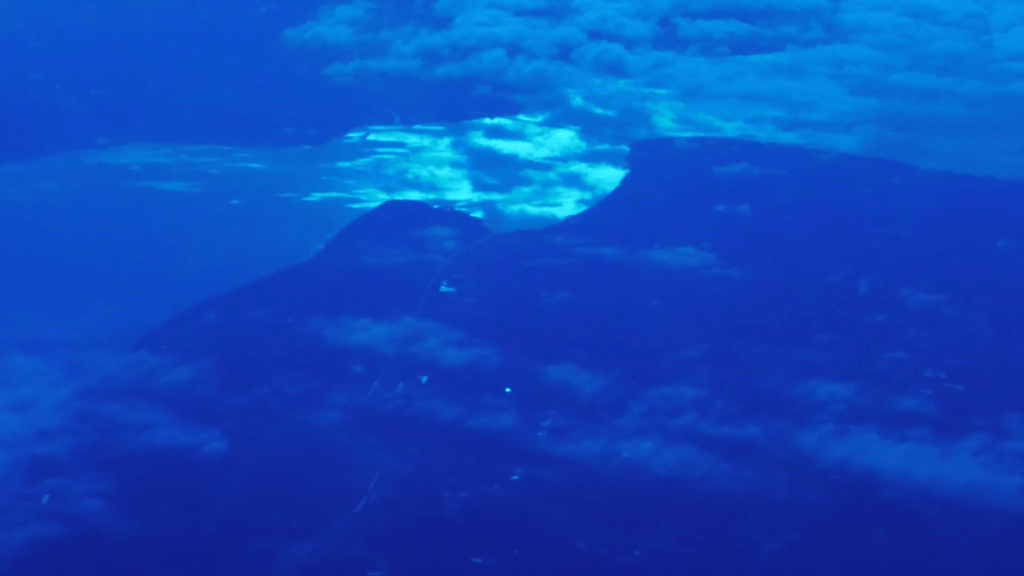
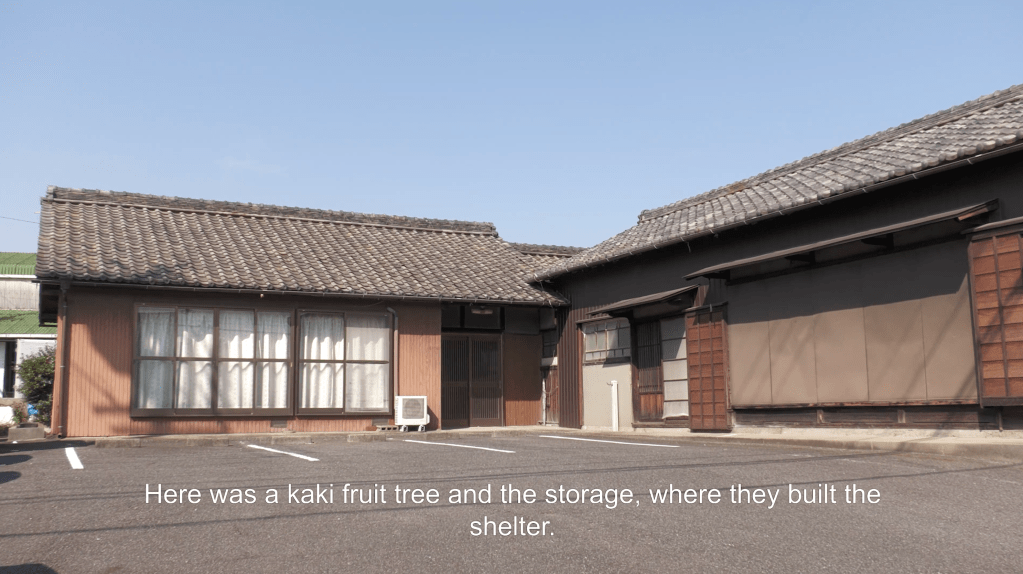

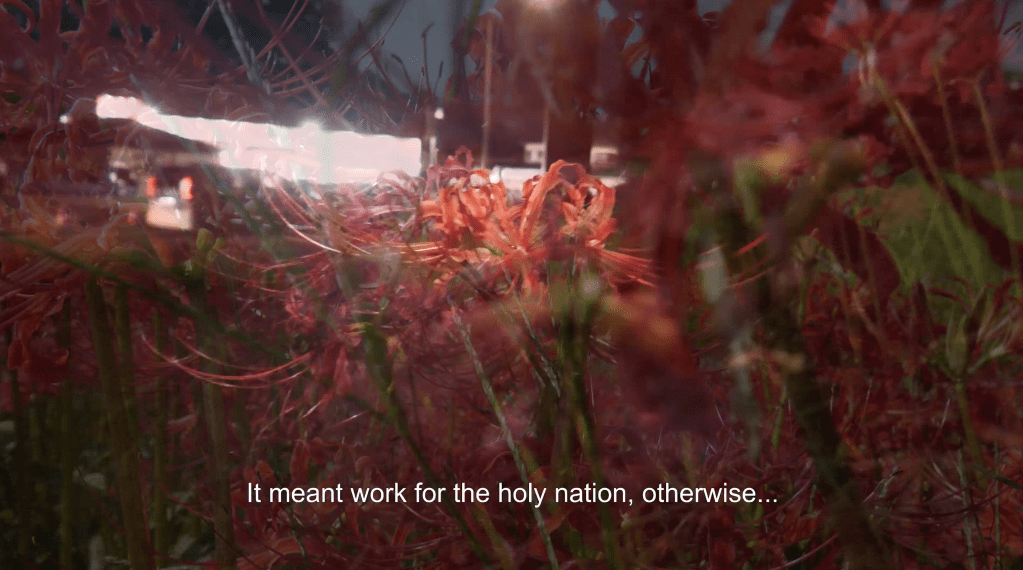



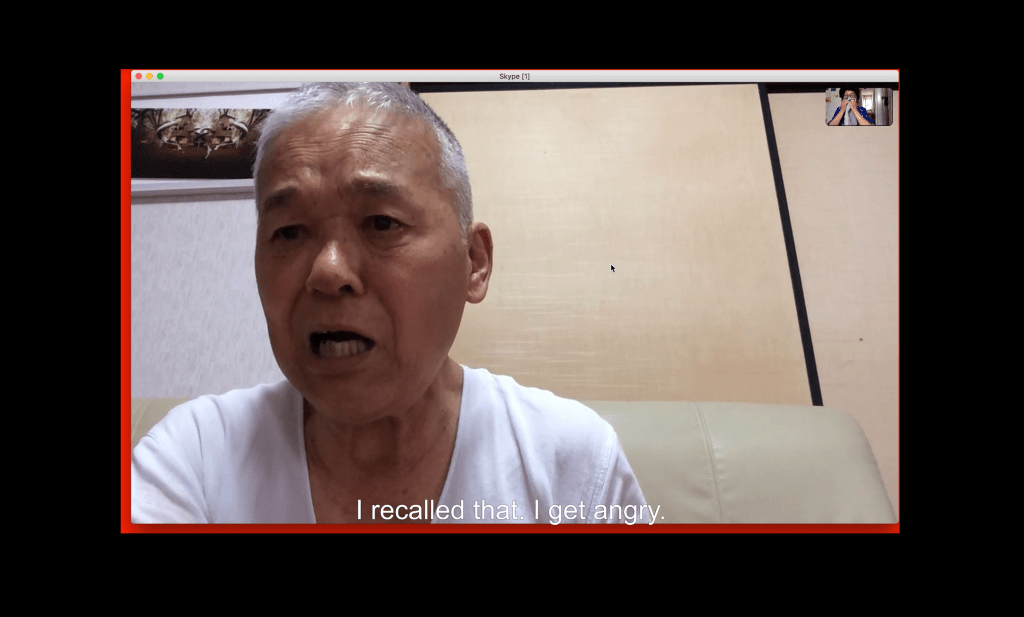
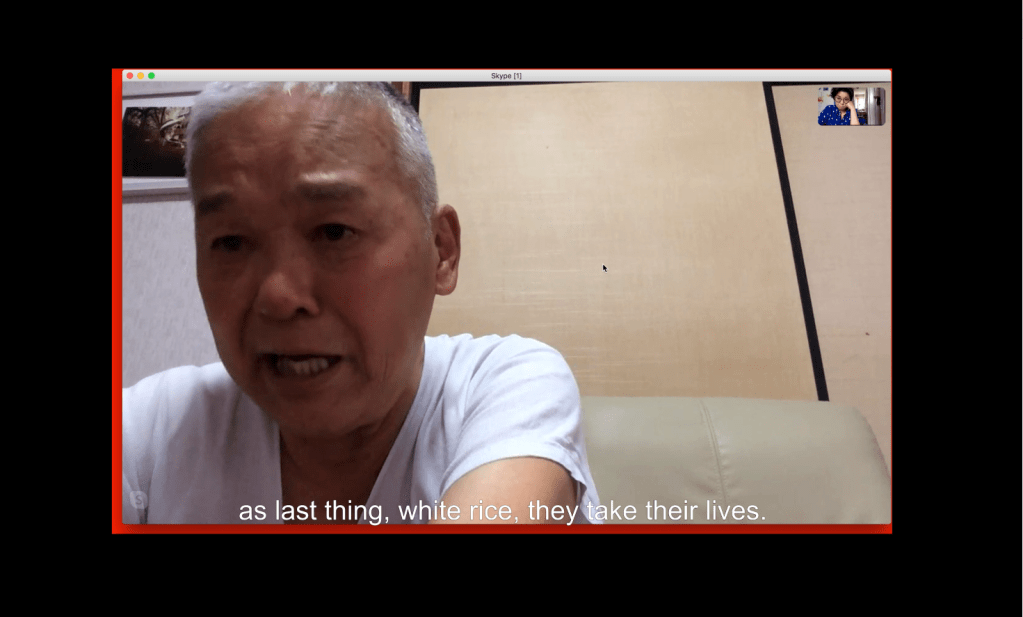
Being confronted with my father’s shame led me to reflect on these questions on a national level. How do these personal memories and conversations tie into the erasure of modernity and imperial-colonial agendas? How did rapid modernization in the Meiji era (1868-1912) cause internalized European imperial colonialism? And, how did the rapid economical recovery from the defeat in the war send the population into oblivion, not only of Japan’s colonial occupation but also of their own wounds? Over a period of 150 years, a form of colonial amnesia has played out in particular ways. The disconnection from roots, the erasure of experiences and memories, and the denial
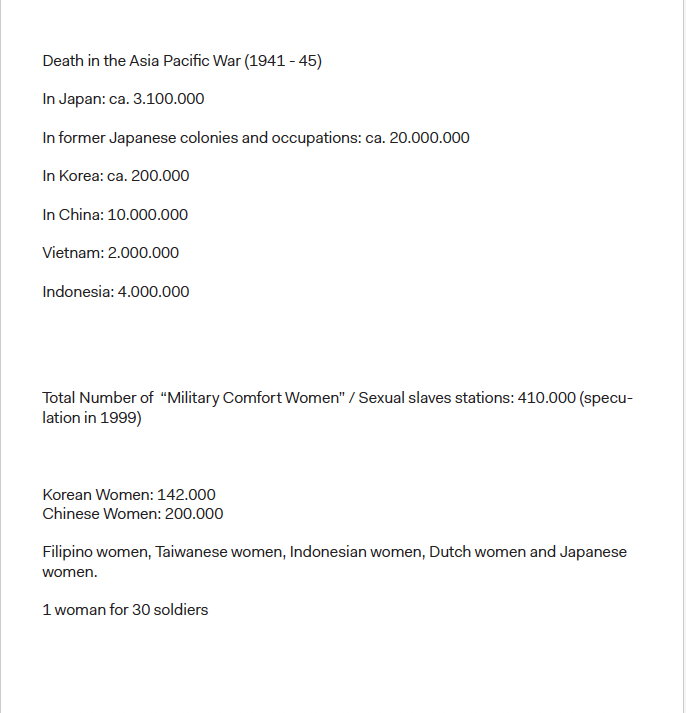
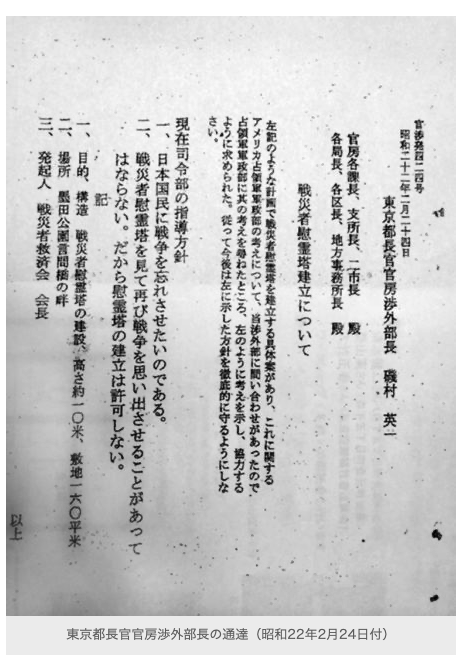
and numbness to the pains of others–often even within families–still seem to lie at the foundation of my motherland. In the exhibition, a small accompanying booklet, serving as a visual or graphic script, sought to further explore how my father’s/my distant relationship to my grandfather Hikoshichi might be understood within the context of Japanese imperial colonialism.
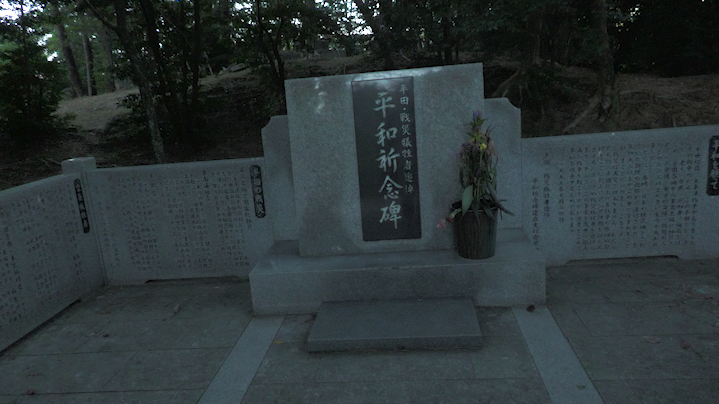
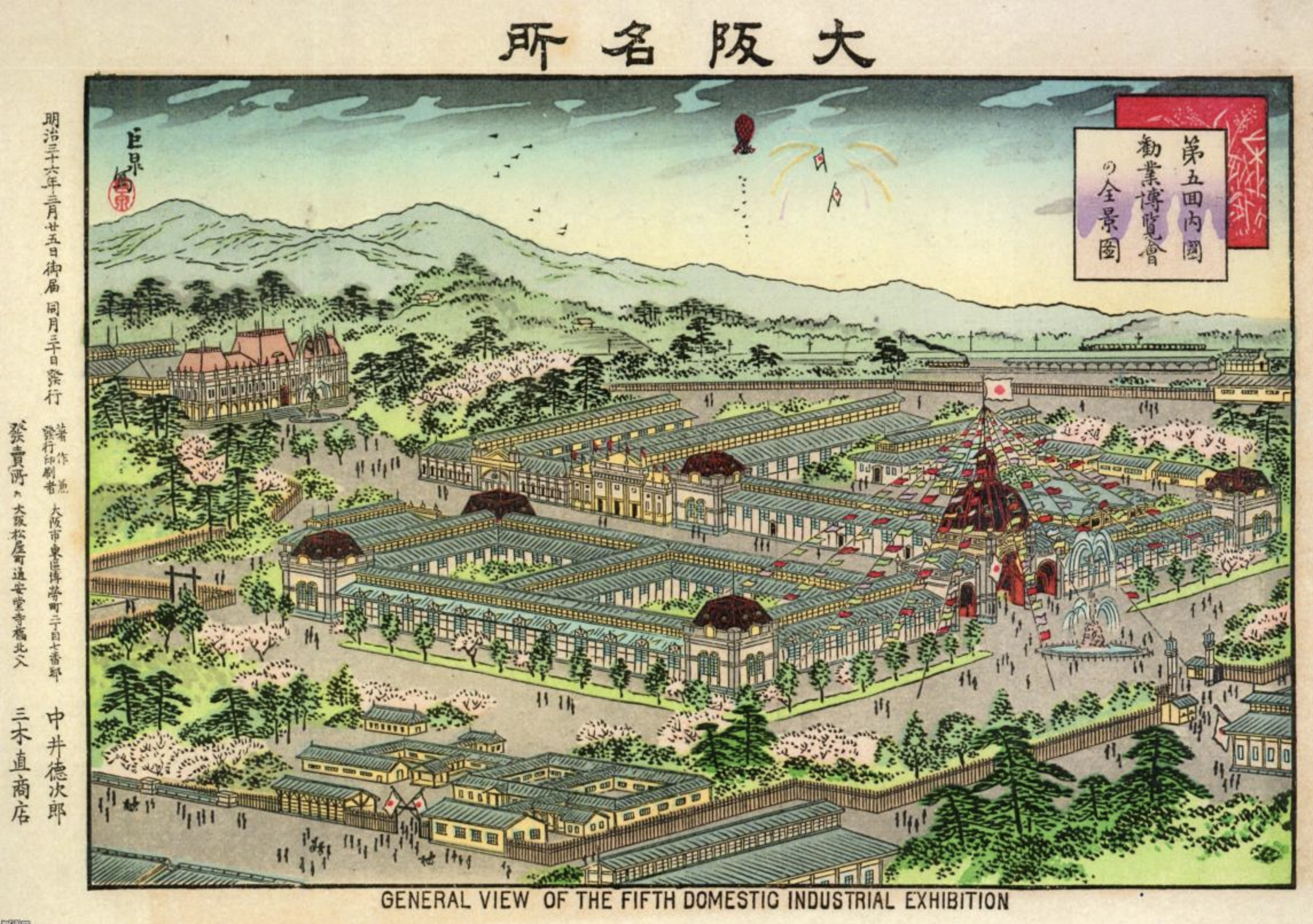
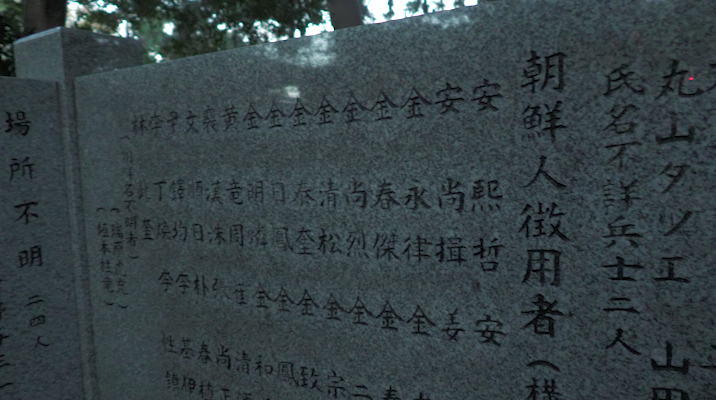
Below, for a further research, video & images from the booklet. These images are both from my own and internet search incl. archival images :






 Toshi Moshi/Toshie Takeuchi